
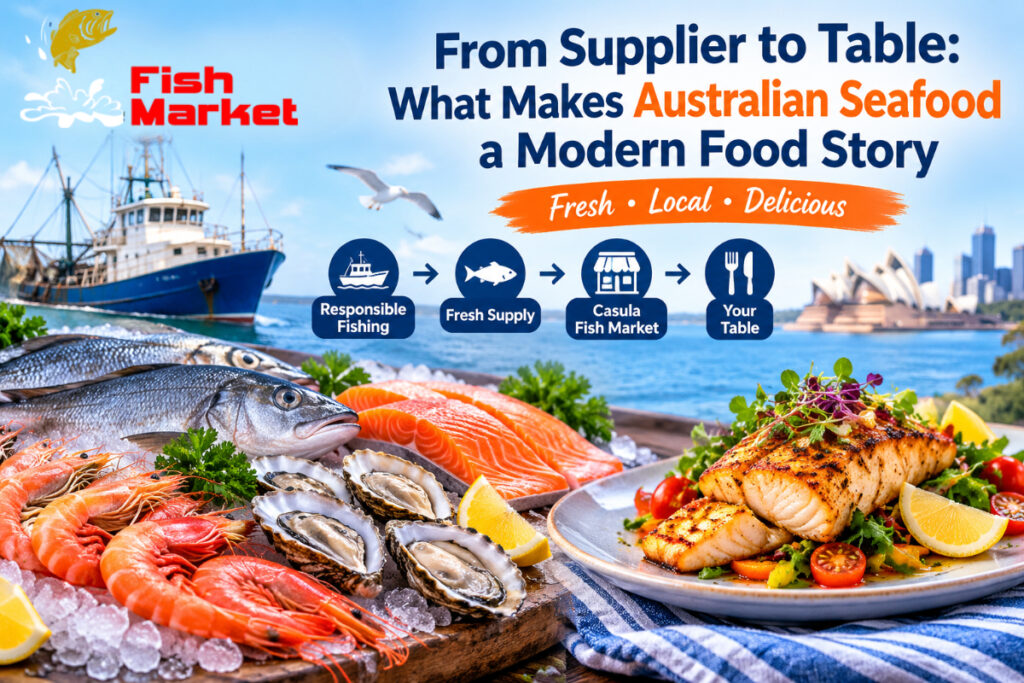
Australia’s seafood culture is often described through its coastline, but the real story begins after the catch. Between the ocean and the finished meal sits a complex network of growers, fishers, processors, retailers, wholesalers, restaurants and catering businesses. Every stage can influence freshness, traceability and the way consumers experience seafood.
This connection is particularly visible around Sydney, where a strong appetite for fish and shellfish meets a sophisticated food-service industry. Understanding that journey reveals why seafood is not simply a product category. It is an important part of Australia’s food identity and a sector shaped by science, sustainability, logistics and changing consumer expectations.
The Supply Chain Is Part of the Seafood Story
A seafood product may pass through several hands before it reaches a plate. Wild-catch operators harvest from managed fisheries. Aquaculture businesses raise species under controlled conditions. Processors prepare products for distribution. Wholesalers and retailers then connect those products with restaurants, caterers and households.
This network is especially relevant to Catering Companies in Sydney because large events can require consistency across significant quantities of seafood. A supplier must be able to provide suitable products while maintaining handling and delivery standards.
The chain also explains why a seafood purchase should not be judged only by appearance. Provenance, storage, temperature control and product knowledge all contribute to the final result.
Why Oysters Tell a Bigger Australian Story
Oysters provide a particularly useful example of how food, geography and industry become connected. Sydney Rock Oysters have a long commercial history in New South Wales, with cultivation dating back to the nineteenth century.
The modern Oysters Market in Australia involves much more than harvesting. Oyster production depends on suitable waterways, water quality, biosecurity, careful movement controls and ongoing monitoring. These factors make oysters closely connected to the health of the environments in which they are produced.
For consumers, that means an oyster is effectively a product of its growing conditions. Its story begins in an estuary or coastal production area long before it reaches a seafood counter or event menu.
Freshness Depends on What Happens After Harvest
People often associate freshness with how recently seafood was caught. That is important, but it is only one part of the equation. Seafood needs appropriate temperature management, careful handling, storage and movement throughout the supply chain.
Food-safety systems also depend on traceability. Records can help businesses identify where products came from and how they moved through production and distribution. This gives buyers greater confidence and helps businesses respond effectively when a food-safety issue arises.
For Seafood Retailers Australia customers, knowledgeable service can therefore be valuable. A retailer who understands species, storage and preparation can help customers make better choices rather than simply selling whatever happens to be available.
Sustainability Is Becoming a Purchasing Question
Sustainability is no longer something that sits separately from the seafood market. It increasingly affects purchasing decisions across households, restaurants and catering operations.
Responsible fisheries management uses scientific information, monitoring and catch controls to protect marine resources. Aquaculture is also evolving through improved production methods, health management and research into more efficient systems.
For Catering Companies in Sydney, these developments can influence how menus are planned. Sourcing decisions can consider availability, seasonality, provenance and responsible production alongside taste and presentation.
The result is a broader understanding of quality. A product can be attractive and delicious while also needing to fit within a responsible supply chain.
Climate Change Adds Another Layer of Uncertainty
Marine environments are dynamic. Changes in temperature, ocean chemistry and currents can influence where species are found and how productive particular areas become.
Aquaculture operations face their own environmental pressures. Oyster production, for example, depends heavily on water conditions and effective disease and biosecurity management. Changes in the surrounding environment can therefore have direct consequences for production.
The Oysters Market in Australia illustrates this connection particularly clearly. Protecting seafood production ultimately requires attention to the ecosystems that support it.
For buyers, this means the seafood market will continue to evolve. Availability and sourcing patterns may change as producers respond to environmental conditions and new research.
Retailers Are More Than Places to Buy Seafood
A modern seafood retailer can serve as an important link between the producer and the consumer. Product variety matters, but so do handling practices, knowledge and the ability to explain what is being sold.
Customers may want to know whether a product is wild caught or farmed, where it originated, how it should be stored or which cooking method suits it. These questions are particularly important when purchasing seafood for a family gathering or a large event.
This is where established Seafood Retailers Australia businesses can add value. Good retail service helps turn an unfamiliar product into a manageable cooking choice and gives customers greater confidence in what they are taking home.
Sydney’s Catering Industry Needs Reliable Seafood Partners
Catering operates differently from ordinary household shopping. A caterer may need dozens or hundreds of portions prepared around a fixed event schedule. Product consistency and delivery reliability therefore become critical.
Seafood can play a major role in weddings, corporate functions, celebrations and large dinners. Oysters, prawns, fish and seafood platters can provide variety, but the caterer needs confidence that the supplier can meet the required quantity and quality.
That makes the relationship between suppliers and Catering Companies in Sydney more important than a simple transaction. Good communication can help businesses select suitable products, plan quantities and manage menus around availability.
Casula Fish Market and the Local Seafood Connection
For Sydney-area customers, Casula Fish Market represents a direct connection between the wider seafood industry and everyday purchasing. The supplied source identifies the business as family-owned and established in 2008, with retail and wholesale operations covering fish, fillets, crustaceans, shellfish, molluscs, oysters, prawns and seafood platters.
That breadth reflects the variety of Australia’s seafood culture. It also gives local customers a practical destination for purchasing different categories of seafood for home meals, functions and commercial requirements.
A broad range is particularly useful when customers are not shopping for one specific species. They can consider different products according to the occasion, availability and intended preparation.
What Consumers Should Ask Before Buying
Choosing seafood does not have to be complicated, but a few questions can improve the purchasing decision. Where did the product originate? How has it been handled? Is it appropriate for the planned dish? How much should be purchased? Is the product suitable for the event or household requirements?
For oysters and shellfish, questions about handling and storage are especially important. For larger catering orders, consistency and delivery arrangements may matter just as much as the product itself.
Customers exploring Seafood Retailers Australia options can therefore look beyond price. Freshness, range, product knowledge, traceability and service can all contribute to better value.
The Future Will Depend on Transparency
The seafood industry is moving towards a future where consumers expect more information about what they buy. Sustainability claims need credible foundations. Supply chains need traceability. Producers and retailers need to respond to changing environmental conditions.
Technology can support this transition by improving monitoring, record keeping and supply-chain visibility. Research can also help fisheries and aquaculture businesses improve productivity while reducing environmental pressures.
The Oysters Market in Australia demonstrates why transparency matters. Consumers increasingly want to understand the journey behind the food they eat, while producers need reliable systems that protect both their businesses and the resources on which they depend.
Australia’s Seafood Legacy Is Still Being Written
Australia’s seafood identity is not preserved simply by continuing old traditions. It evolves whenever producers adopt new methods, retailers improve service, scientists develop better systems and consumers become more informed.
The coastline remains the starting point, but the modern seafood story is created through the entire journey from water to market to kitchen.
For Catering Companies in Sydney, this means sourcing can become part of menu quality and event planning. For the Oysters Market in Australia, it means balancing heritage with environmental responsibility. For Seafood Retailers Australia, it means connecting customers with products through knowledge, handling and trust.
That broader perspective makes Australian seafood more than a meal. It becomes a story of place, people, science and responsible food culture.
Frequently Asked Questions
- Where can I buy fresh seafood in Sydney?
Customers looking for fish, oysters, prawns and shellfish can explore Casula Fish Market for retail and wholesale seafood options in New South Wales.
- Where can I order oysters for an event?
Customers planning an event can contact Casula Fish Market to discuss oyster and seafood selections suitable for gatherings, functions and special occasions.
- Can Catering Companies in Sydney source seafood for large events?
Yes. Catering businesses can work with established seafood suppliers to select fish and shellfish suitable for menus, functions and larger gatherings.
- Why is the Oysters Market in Australia important?
Australia has a long oyster-farming heritage, particularly in New South Wales, where Sydney Rock Oysters have been commercially cultivated since the nineteenth century.
- What should I look for when choosing Seafood Retailers Australia?
Consider freshness, variety, traceability, food-safety practices, product knowledge and the retailer’s ability to explain origin and handling.
From Coast to Kitchen
The journey of Australian seafood does not end when a product reaches a shop. It continues through the decisions made by retailers, chefs, caterers and consumers. Every choice can influence how seafood is stored, prepared, presented and ultimately remembered.
A stronger understanding of the supply chain makes it easier to appreciate the work behind a plate of oysters, a seafood platter or a simple fish dinner. It also highlights why responsible sourcing and knowledgeable service matter.
Australia’s coastline may begin the story, but people across the seafood industry keep writing it — from the producer and retailer to the catering company and the customer at the table.


